


Demography and social statistics
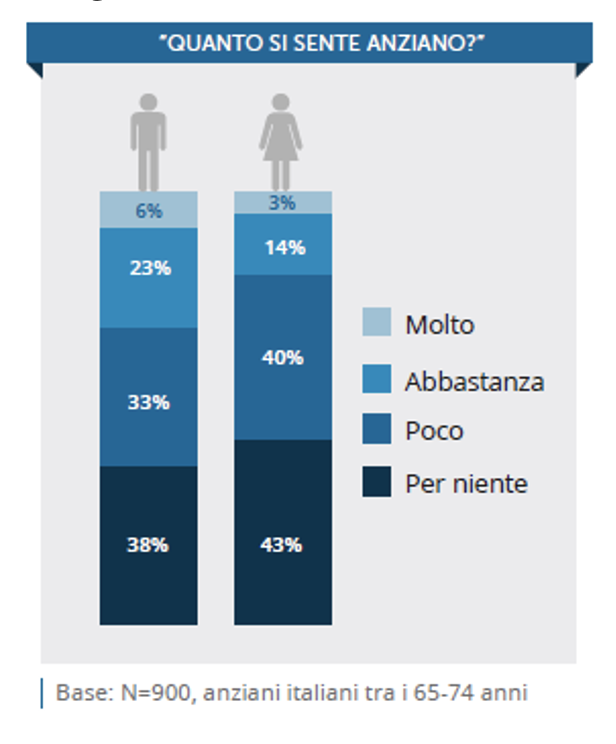
The aging of the population is one of the main processes of change of this century, with repercussions not only related to the quantitative growth of the more mature segment of the population, but also to the qualitative changes that affect the various stages of life.
Both these aspects are of interest for the research activity of the Department. In particular, the study of family strategies of interchange and mutual support in the various stages of life, the welfare system and the increase in the demand for care in old age, the constraints and opportunities of employment in mature age (including the theme of Age management, the study of the aging of the workforce and the analysis of business strategies for the enhancement of the over 55s).
The activity carried out is part of a network between universities (Lola) and participating in interdisciplinary research projects (including: "I don't retire: the extension of life, a challenge for generations, an opportunity for society", coordinated by Fausto Colombo and "Healthy Ageing and the Labour Market" coordinated by Claudio Lucifora).
As part of the third mission, a structured collaboration is active with the "Senio R Observatory" and the "Silver Economy Forum".
Keywords and topics covered:
Aging, Active Aging, Longevity, Life Stages, Seniors.
People involved:

One of the decisive events in the process of transition to adulthood is the entry into the world of work, which in Italy is made increasingly difficult by the persistent negative economic situation and by a welfare and labour market structure that hinder the stable integration of young people. In particular, the percentage of young NEETs "Not in Education, Employment or Training" is increasing dramatically, with decisive consequences on the life paths of young people and their families of origin, which increasingly play the role of informal "social safety net". However, the repercussions of the spread of NEETs go beyond the material sphere and also concern the political participation of young people and the deterioration of the intangible dimensions of well-being, with more general consequences on the relationship with others.
The causes and consequences of the condition of NEETs are analyzed. Among the causes, the effect of the training path, the family background of origin and the territorial context of residence is analyzed. The condition of NEET and the duration of stay in this condition in turn act by worsening the indicators of well-being and material and psychological deprivation, contributing to making the condition of NEET chronic and hindering the achievement of full personal autonomy. In this context, the research activity within the department is carried out on research projects that carry out longitudinal surveys and are part of a network involving Italian realities such as the Toniolo Institute for Higher Studies and the Cariplo Foundation.
Keywords and topics covered:
NEETs, Youth, Subjective well-being, Longitudinal surveys on life paths, Youth Report, Social participation.
People involved:
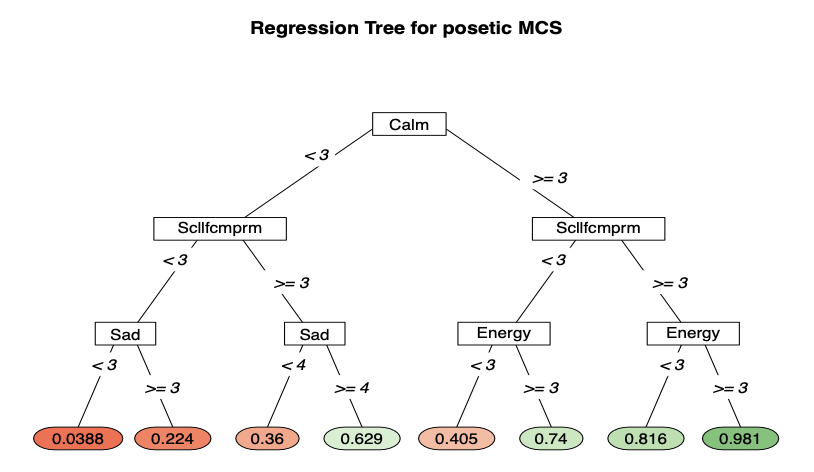
In many application contexts, the need arises to aggregate information deriving from a series of elementary indicators in a single measure, called Compound Indicator (CI). For the construction of these CIs it is necessary to go through some steps which are: 1. choice of elementary indicators; 2. pre-treatment of the selected indicators; 3. choice of a weight system; 4. choice of an aggregation function of elementary indicators; 5. Validation. The research line focuses in particular on points 2, 3 and 4. More specifically, to the case in which elementary indicators are supposed to be ordinal variables, with the consequent problem of transforming qualitative data into quantitative data useful for the implementation of the following points. Among the methodologies that have been considered are several scoring methods, the use of dissimilarity indices for ordinal data, and the use of the POSET method.
Keywords:
Composite indicators, ordinal data, Poset.
People involved:

Completing one’s education, finding a job, leaving the parental home, getting married, and having children once marked, in a relatively predictable sequence, the transition to adulthood. For today’s younger generations, however, these milestones are far less linear and certain. Young people remain in education longer, enter the labour market later, leave the parental home at older ages, marry less frequently, and have fewer children later in life.
What factors shape young people’s choices, intentions, and behaviours in these areas? To what extent do their actual life trajectories correspond to their aspirations and plans? And how can public policies help young people realise their personal, family, and professional goals?
Particular attention is given to fertility intentions and their fulfilment. Low birth rates have been a long-standing concern in Italy and across Europe, and the trend has been further intensified by recent economic crises, particularly the disruption associated with the COVID-19 pandemic.
By combining data from major European surveys - including the European Social Survey, EU-SILC, and the European Values Study - with surveys conducted by the Toniolo Institute, these studies provide a distinctive perspective on the life plans of young Italians and how they compare with those of their European peers.
Keywords and topics covered:
Fertility, Transition to adult life, Intentions, Family policies, Youth Report
People involved:
Daniela Bellani, Francesca Luppi, Alessandro Rosina, Emiliano Sironi
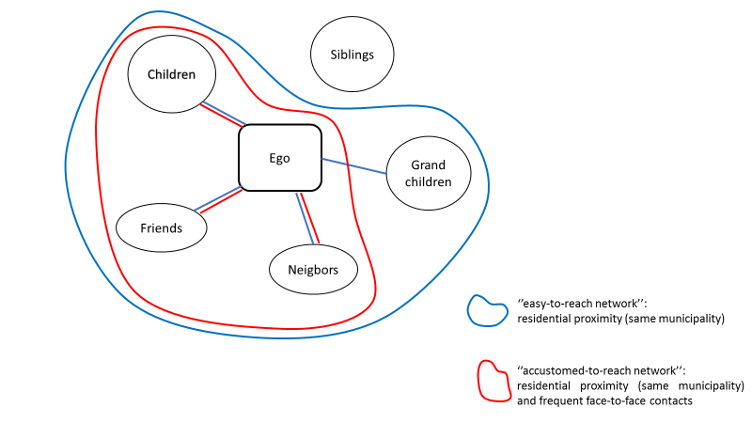
Each person (ego) is in fact inserted in a social network formed by the domestic aggregate, by kinship or by the intertwining of extra-parental alliances. This personal network (ego-centered network) can prove to be an important tool of resilience that conveys useful resources to stimulate and strengthen the ability to react positively to difficulties and critical events encountered along one's life path. This network can also identify a level of analysis hierarchically superior to the individual, useful for understanding the interaction between individual behaviors and the social context to which the person belongs.
This line of research intends on the one hand to deepen what are the opportunities offered by official statistical sources to portray and analyze with a quantitative approach the heterogeneity of the networks of relationships in which the individual acts and is involved through exchanges, forms of support given or received or contacts with cohabiting and non-cohabiting relatives, friends, acquaintances.
On the other hand, the studies conducted and/or ongoing intend to show how the type of network in which the individual finds himself can change according to the stage of the life course (young/old), socio-demographic characteristics (gender/ethnicity), period contingencies (pandemic emergencies) or type of welfare regime.
Keywords and topics covered:
Social networks; social support; multilevel models; Istat; networks and active ageing; support networks for foreign women with dependent minor children; social networks and life satisfaction; social isolation; SHARE; networks and the Covid-19 pandemic.
People involved:

The project aims to integrate the knowledge on the phenomenon of youth unemployment obtained from classical survey and analysis methodology with analysis techniques from Social Media Data, in order to develop new skills to analyze young people in their relationships with the world of work. The predictive power of the knowledge deriving from the digital behavior of users (in particular the Likes on Facebook pages and the profiles followed on Instagram) is analyzed, in order to estimate not only sociodemographic characteristics, but also personological, behavioral and longitudinal studies, such as the possible entry or potential exit from the condition of NEET, with the aim of activating young people more in an efficient search for a job and of implementing and evaluating public intervention policies
Keywords and topics covered:
Social Media Data, Social Networks, Youth Unemployment, NEETs, Well-being Measures, Evaluation of the effectiveness of intervention
Selected publications:

Social stratification has a profound impact on inequalities, leading to differences in levels of well-being, literacy and value systems. In particular, social inequalities and the perception of them directly affect well-being, affecting both physical and mental health and the economic stability of individuals. In addition, socio-economic inequalities have a significant impact on literacy in its various forms: a low level of knowledge (in terms of literacy and cognitive skills, for example) can hinder not only personal well-being, but also social mobility, thus widening socio-economic gaps. Last but not least, more or less wide inequalities influence the sphere of values of individuals, which is reflected in adherence to values such as equity, social justice or in political-social attitudes. In particular, the consequences of social stratification on different dimensions of well-being, on the declinations of literacy and on the sphere of values of individuals are analyzed, using both international (such as PISA and ESS) and national (Youth Report and Senior Observatory) data, and applying descriptive, inferential or predictive techniques.
Keywords and topics covered:
Social stratification, Inequalities, Wellbeing, Literacy
People involved:
Daniela Bellani, Andrea Bonanomi, Elisa Cisotto, Francesca Luppi, Giulia Rivellini, Alessandro Rosina
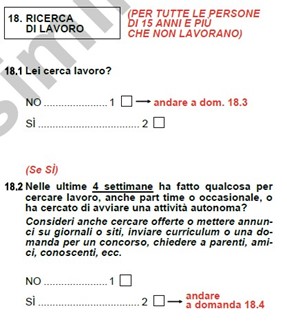
As part of the D3.2 project "(Im)perfect strangers. A trans-disciplinary study on the phenomenon of adult male inactivity" (Augusto Cocorullo and Laura Zanfrini, Department of Sociology, Unicatt), the research line aims to explore the statistical perspective of quantification and analysis of the collective of inactive males in Italy. To this end, after identifying the official surveys conducted by Sistan bodies suitable for portraying the socio-demographic characteristics and issues of interest for understanding the phenomenon, we will proceed with the analysis of the elementary data of the Istat Labour Force Survey, focusing on previous work experience and reason for the interruption, self-perceived condition, educational path and family type of inactive males aged between 30 and 54 years.
KEYWORDS:
Work; inactivity; RFL; males
PEOPLE INVOLVED:
Giulia Rivellini
