
Quantum field theories and holography
Group members
Roberto Auzzi, Giuseppe Nardelli, Lihan Guo
Description
Our research interests gravitate around several themes in theoretical physics. This includes the following topics.
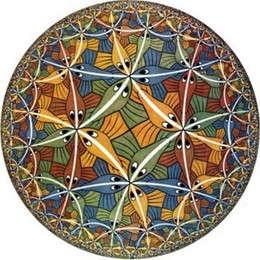
- The correspondence between anti-de-Sitter spacetime (AdS) and Conformal Field Theory (CFT) is a powerful framework to investigate the dynamics of quantum field theories and gravity. This correspondence establishes a quantitative relation between a gravitational theory defined in AdS spacetime and a CFT living on its boundary, providing a concrete realization of the holographic principle. The holographic dictionary offers a new perspective on several open physical problems. Challenging questions about quantum aspects of black hole physics can be rephrased in terms of quantities that are well defined in the boundary theory.
- Entanglement entropy provides a way to characterize quantum correlations between different parts of a system. In the AdS/CFT correspondence, the Ryu–Takayanagi formula relates the entanglement entropy of a boundary region to the area of a minimal surface in the bulk. This result suggests that the spacetime geometry is somehow built from the pattern of entanglement among the boundary degrees of freedom.
- There are several situations in which entanglement alone is not enough to probe the bulk geometry. For instance, the geometry in the interior of a black hole keeps growing long after the boundary state has thermalized and its entanglement entropy has saturated. This property suggests that other quantum information tools such as computational or Krylov complexities may encode the late-time growth of the black hole interior.
- The extension of the holographic principle to a de Sitter (dS) spacetime, which better describes our accelerating universe, raises deep conceptual and technical problems. The absence of supersymmetry and of a controlled string theory embedding leaves us without the top-down examples that made AdS/CFT precise. In the AdS case, the dual theory lives on a timelike conformal boundary, which is not present in the dS case. One way around this difficulty might be to embed a dS bubble inside an asymptotically AdS spacetime. This approach might offer a controlled route toward a holographic description of de Sitter physics.
- Although AdS/CFT was first formulated for relativistic CFTs, strongly coupled dynamics is also important for non-relativistic systems. Non-relativistic limits of the AdS/CFT correspondence, such as the spin-matrix theory, may help to isolate solvable corners of the duality where both sides can be compared more directly.